
The Complete Patio Furniture Buying Guide: What Actually Matters Before You Buy
Shopping for patio furniture always sounds simpler than it turns out to be. You picture a nice table, a few chairs, maybe a cushion or two — and then you actually start looking, and suddenly you’re comparing five different materials, three completely different price tiers, and a dozen configurations you didn’t know existed. If you’ve found yourself a dozen browser tabs deep trying to figure out what’s actually worth buying, this guide is for exactly that moment.
The goal here isn’t to point you at one “best” set, because the honest answer is that the best patio furniture for one household looks nothing like the best outdoor furniture for another — it depends entirely on your space, your climate, and how you actually plan to use it. Whether you’re furnishing an empty backyard from scratch or replacing a tired old patio furniture set, what this guide will do is walk through the decisions that actually matter, in the order they actually matter, so you can shop with a clear sense of what you’re looking for instead of just reacting to whatever outdoor patio furniture happens to be on sale.
Start With the Space, Not the Furniture
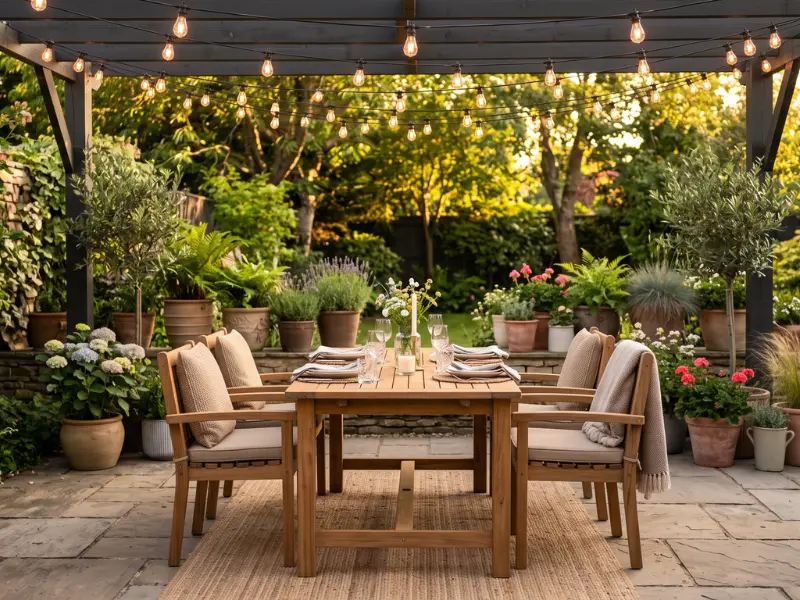
Before comparing a single chair, it’s worth being honest about where this furniture is actually going. A wraparound front porch, a small apartment balcony, a wide-open backyard patio, and a narrow side deck all call for genuinely different approaches — not just in size, but in the whole category of furniture that makes sense.
Front porch furniture tends to lean toward a couple of comfortable chairs and maybe a small side table — it’s a space for sitting and watching the street, not hosting a dinner party. Deck furniture and balcony furniture often deal with tighter footprints and need pieces that don’t overwhelm the space. Lawn furniture and broader garden furniture setups have more room to work with, which opens up bigger dining sets and multi-piece conversation groupings. None of these are wrong categories to shop in — they’re just different starting points, and figuring out which one actually describes your space narrows the search dramatically before you even look at a single product listing.
Materials: The Decision That Affects Everything Else
This is the part that quietly determines how happy you’ll be with your purchase a year from now, so it’s worth slowing down here.
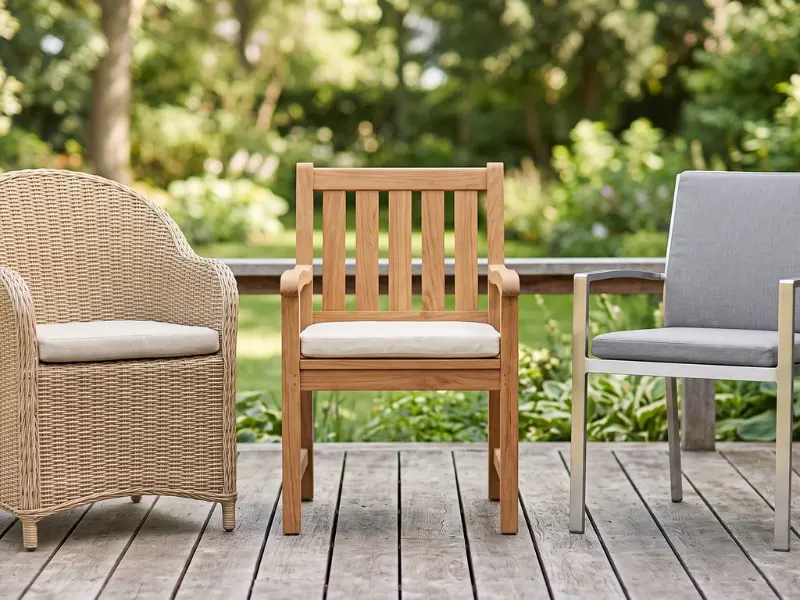
Wicker and rattan (usually synthetic resin wicker rather than the natural plant material) are probably the most popular style for a reason — they look finished and put-together right out of the box, hold up reasonably well outdoors, and a wicker patio set generally comes with cushions included, which saves a separate purchase. The tradeoff is that lower-quality synthetic wicker can get brittle and start cracking after a couple of harsh summers, so it’s worth checking whether the weave is UV-treated before buying.
Wood — teak, acacia, and eucalyptus are the common outdoor choices — brings a warmer, more natural look and tends to age gracefully if it’s properly treated, though untreated wood does need occasional oiling to keep from graying out. Wooden patio furniture is often priced higher than resin alternatives, but it also tends to have a longer usable life if you maintain it.
Metal — aluminum, steel, and wrought iron — is the category for anyone who wants furniture that basically shrugs off weather. Aluminum in particular is lightweight, doesn’t rust, and holds up well in humid or rainy climates, while wrought iron is heavier and sturdier but needs a rust-resistant coating to last outdoors long-term.
There’s no universally “best” material here — it really comes down to how much upkeep you’re willing to do versus how much you want to spend up front.
Figuring Out What Configuration You Actually Need
Once the material question is settled, the next decision is what kind of set actually fits how you use the space.
A basic patio table and chairs setup — four chairs and a table, sometimes with an umbrella hole built in — is the most flexible option and works for almost any outdoor space, from a modest deck to a full backyard. If you host bigger gatherings, a full patio dining set built for six or eight seats changes the equation entirely and needs considerably more square footage to make sense.
For spaces meant more for lounging than eating, conversation-style sets — a small outdoor sofa or sectional paired with a couple of chairs and a coffee table — create a more relaxed hangout spot rather than a dining setup. A lot of outdoor furniture sets sold today actually blend both ideas, offering modular pieces that can be arranged as a sectional one season and pulled apart into individual chairs the next, which is worth considering if your patio doubles as both a dinner spot and a lounge area depending on the day.
Matching Furniture to a Small Space
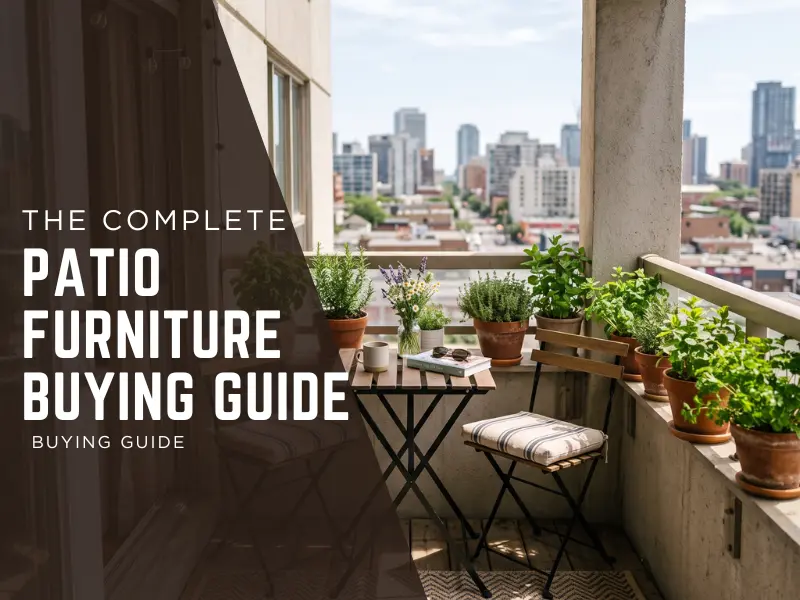
If you’re working with a smaller footprint — a modest balcony, a narrow deck, a compact patio just off the kitchen — the calculus changes a bit. Small patio furniture is really its own category at this point, with brands increasingly designing bistro sets, foldable chairs, and slim-profile tables specifically for garden furniture in small patio spaces where a full dining set simply won’t fit. A two-person bistro set or a compact loveseat with a single side table often makes a tight space feel intentional rather than cramped, whereas forcing a six-seat dining set into a small deck usually just makes the whole area feel blocked and unusable.
Setting a Realistic Budget
Patio furniture spans an enormous price range, and it’s worth knowing roughly where the tiers sit before you start comparing specific sets. Budget and cheap outdoor furniture — typically resin or lightweight metal, often flat-packed for at-home assembly — can furnish a small patio for well under what a single premium piece might cost, and for a starter apartment or a rental where you’re not planning to stay long-term, that’s often the smarter call. Mid-range sets, usually better-built resin wicker or aluminum with included cushions, sit in the middle and tend to be the sweet spot for most households. At the top end, teak, wrought iron, and designer-branded sets cost significantly more but are generally built to last many seasons without needing replacement.
A practical way to think about it: if you’re furnishing a space you’ll actually use every week through the warm months, spending a bit more up front on a set with a solid frame usually costs less over time than replacing a budget set every couple of summers. If it’s an occasional-use space, the cheaper route makes more sense.
Keep an eye out for clearance and end-of-season sales too — patio furniture pricing swings hard by season, and buying at the tail end of summer for the following year is one of the more reliable ways to get a better-built set at a lower price.
Where to Actually Buy It
Once you know roughly what you’re after, the shopping part splits into a few paths. Big-box retailers carry some of the widest in-stock selection and are often the fastest way to actually see and sit in a set before buying — useful if you’d rather not order something sight-unseen. One of the more recognizable names here is the Better Homes and Gardens patio furniture line, sold through Walmart, which spans everything from budget-friendly bistro sets to larger wicker dining collections and tends to show up often in comparison shopping simply because of how widely available it is.
Dedicated patio and garden furniture stores, meanwhile, tend to carry a narrower but higher-quality range, and are worth checking if you’re leaning toward a pricier, longer-lasting set. And if you’d rather shop locally and see things in person, searching for a patio furniture store near you is usually the fastest way to compare a few in-stock options side by side before committing to anything.
Don’t Forget the Accessories
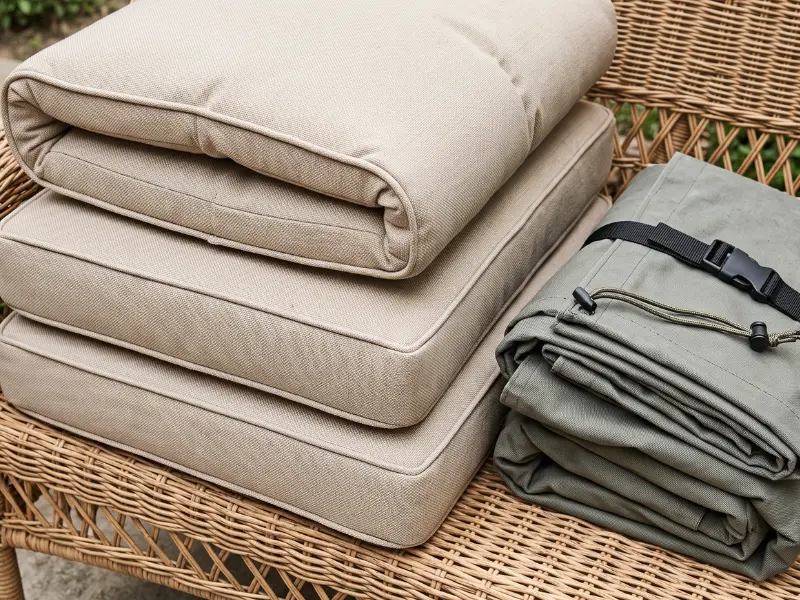
A few smaller purchases end up making a bigger difference than people expect. Patio furniture cushions are worth checking for removable, washable covers — outdoor fabric handles sun and rain reasonably well, but the ability to actually wash a cushion cover extends its life considerably. Fitted furniture covers are the other easy win, especially heading into a rainy season or winter storage — a decent cover can be the difference between a set that lasts three summers and one that lasts eight.
FAQS
Is it better to buy a full patio set or individual pieces? A matched patio furniture set is almost always the easier and often cheaper route if you’re starting from nothing, since the table, chairs, and cushions are designed to work together. Buying pieces individually makes more sense if you already own part of the setup — say, a table you like — and just need matching chairs, or if you want a more custom look than a boxed set allows.
How long should decent patio furniture actually last? A well-built set in a mid-range material — good resin wicker, coated aluminum, properly sealed wood — should reasonably hold up for five to eight years of regular seasonal use. Budget sets often start showing wear within a season or two, particularly if they’re left uncovered through rain and direct sun year-round.
Do I need to bring furniture inside for winter? It depends heavily on material and climate. Aluminum and quality resin wicker can generally stay outside year-round with a good cover. Wood benefits from either storage or at least a cover plus an annual reseal. In climates with real freeze-thaw cycles, cushions in particular should come inside or into a deck box, since repeated moisture and freezing is what actually shortens their lifespan.
What’s the actual difference between “patio,” “deck,” and “lawn” furniture? Functionally, not much — a comfortable chair works about the same whether it’s sitting on a patio, a deck, or open grass. The distinction mostly comes down to how much space you’re working with and what’s underfoot: patios and decks tend to favor sets with a defined footprint, while open lawn or garden furniture setups have more flexibility for larger dining or lounge arrangements.
Bringing It All Together
If there’s one overarching piece of advice here, it’s this: figure out your space and how you’ll actually use it before you look at a single set, decide on a material based on how much upkeep you’re realistically willing to do, and set a budget tier that matches how often that space will get used. Everything else — the specific dining set, the exact configuration, which retailer to buy from — falls into place a lot more easily once those three questions are answered. Patio furniture shopping feels overwhelming mostly because people start with the product instead of the space, and flipping that order is really the whole trick.