


How to Clean a Mattress (Without Losing Your Mind Over It)
There’s a very specific kind of panic that hits when you pull back the sheets and see a stain you don’t remember making. Or when a friend sleeps over and, halfway through the visit, you catch a whiff of something off your own bed and think, “when did that start?” If either of those sounds familiar, you’ve probably already typed some version of “how to clean a mattress” into Google at 11pm, half-hoping there’s a magic spray for it and half-dreading that there isn’t.
Here’s the actual truth: cleaning a mattress is not hard. It’s just a job nobody teaches you, so it feels bigger than it is. Once you know the handful of tricks that actually work — and the couple of things you should never do — it becomes a pretty quick weekend task instead of a source of dread. So let’s just go through it properly, the way I’d explain it to a friend who texted me a panicked photo of their mattress.
First, Why Your Mattress Gets Gross in the First Place
You sleep on this thing for roughly a third of your life. Every night it’s absorbing sweat, skin cells, the odd spilled drink, pet hair if you’ve got a dog that thinks the bed is also his, and slow layers of dust that eventually turn into dust mites’ favorite hangout spot. Nobody sees this happening day to day, which is exactly why it sneaks up on you — you don’t notice the mattress changing until one day it’s noticeably yellow, or it smells a bit sour even right after you’ve washed the sheets, or there’s a strange texture of fluff clinging to the surface that definitely wasn’t there when you bought it.
None of that means you did anything wrong. It just means mattresses need occasional attention, the same way carpets or upholstery do, even though they’re hidden under blankets most of the time.
How Often Should You Actually Be Doing This?
A quick vacuum and once-over deserves to happen every couple of months — nothing intense, just enough to knock out surface dust and catch anything before it sets in. A proper deep clean, the kind where you’re pulling everything off the bed and giving it a real treatment, is more of a twice-a-year thing for most households. If you’ve got allergies, pets, or small kids who treat the bed as a snack station, you’ll probably want to do it a bit more often than that.
The Deep Clean, Step by Step
Okay, here’s the actual process. Nothing fancy, just do it in order and you’ll get a genuinely clean mattress by the end of it.
Strip the bed completely. Sheets, mattress protector, any toppers — all of it comes off and goes straight into a hot wash. You want the mattress itself completely bare before you start.
Vacuum every inch. This is the step people skip, and it’s honestly the most important one. Use the upholstery attachment if you have one, and don’t just do the top — get into the seams, the edges, and the sides where dust and dead skin like to collect. If you’re someone who deals with allergies, a dedicated vacuum built for mattresses can make a noticeable difference here, since regular vacuums aren’t always great at pulling out what’s buried deep in the fabric.
Deal with any stains before anything else. We’ll get into specifics in a second, but the short version is: treat stains before you deodorize, not after, so you’re not trapping anything under a layer of powder.
Cover the whole surface in baking soda. Not a light dusting — a proper, even layer across the entire mattress. Leave it alone for at least an hour. If the mattress has a real odor problem, let it sit for several hours, or even overnight if you can manage without the bed for a night. The baking soda pulls moisture and smell out of the fibers in a way that nothing else really does at home.
Vacuum again to lift all the baking soda back off. This is oddly satisfying, honestly. You’ll see it, and it’ll usually look a little discolored from whatever it just absorbed.
Let it breathe. Open a window, let some sunlight and air hit it if you can. Moisture and odor both hate fresh air and light, so even twenty minutes of this helps.
Flip or rotate if your mattress supports it, just to even out the wear before you make the bed back up.
That’s the whole deep clean. It sounds like a lot written out, but in practice it’s maybe forty minutes of actual hands-on work, with a lot of “leave it and go do something else” time built in.
Stains: The Part Everyone Actually Cares About
Let’s talk about stains, because that’s usually what sends people searching in the first place. The golden rule, no matter what the stain is: blot, don’t scrub. Scrubbing feels productive but it just pushes whatever it is further into the foam and makes it worse. You want small amounts of liquid, patience, and a clean cloth you’re willing to swap out often.
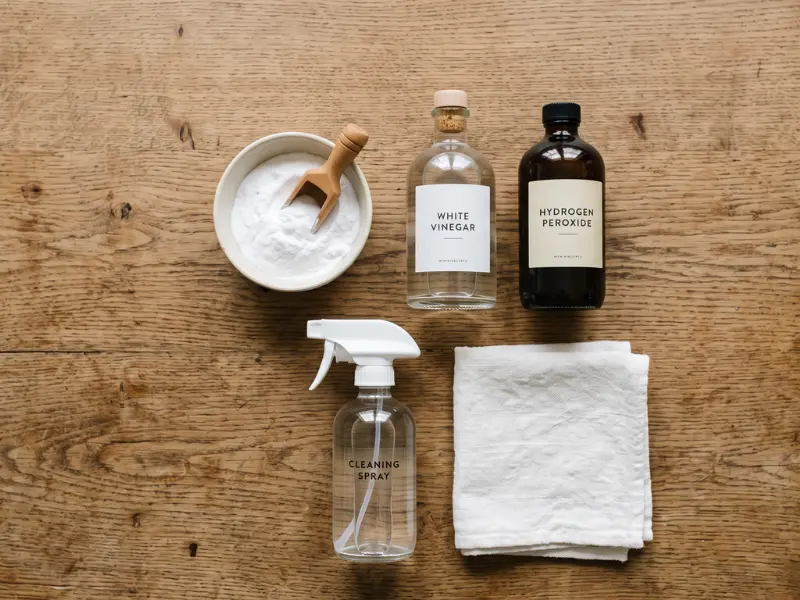
A mix that works for a huge range of stains — sweat, old spills, general discoloration — is a few tablespoons of hydrogen peroxide with a small drop of dish soap and a spoon of baking soda stirred together. Dab it onto the mark, give it ten or fifteen minutes to work, then blot with a damp cloth to lift it out. It’s not instant, and stubborn or older stains might need a second round, but it handles most of what shows up on a normal mattress.
If you’d rather not use peroxide, a diluted vinegar-and-water spray does a gentler job and works well on lighter or older marks. It won’t have quite the same lifting power on something set-in, but it’s a good first pass, and it’s already sitting in most kitchens.
Sweat marks specifically tend to show up as that faint yellowish tint along where you sleep. It’s not dirt exactly, it’s oils and salts built up over time, and it usually takes a couple of treatments to properly fade, not just one.
Pee. Let’s Just Talk About It Directly
A huge number of people land on this topic because of a kid, a pet, or an accident, and there’s a strange amount of embarrassment attached to it that really doesn’t need to be there. It happens. Here’s what actually works.
Blot up as much of the liquid as you can first, pressing down rather than rubbing it around. Then mix equal parts white vinegar and water in a spray bottle and spray it directly over the affected spot. Let that sit for five to ten minutes — the vinegar is doing real work here, neutralizing the ammonia that causes that sharp smell. Blot it again, then cover the still-damp area with baking soda and let it dry completely, which usually takes a few hours. A fan pointed at it speeds things up a lot. Once it’s fully dry, vacuum the baking soda away.
For pets specifically, vinegar alone sometimes isn’t quite enough, because pets can still detect a faint trace that we can’t, and they’ll keep returning to the same spot. An enzyme-based cleaner is worth having around if you’ve got animals in the house — it actually breaks down the proteins in the mess rather than just masking them, which is the difference between a spot that stays clean and one that keeps attracting repeat visits.

Vomit and Blood, Because Sometimes That’s Life
Nobody enjoys this section, but it happens, especially with kids or a stomach bug making the rounds. Scrape off anything solid first with a spoon or the edge of a butter knife — don’t try to wipe it, just lift it away. Then treat the area with that same peroxide-dish soap mix from earlier, and finish with baking soda once it’s dried a bit.
Blood is its own thing, and the one rule that actually matters is: cold water only, never hot. Heat sets the proteins in blood into the fabric, and once that happens it’s genuinely hard to shift. Cold water with a touch of hydrogen peroxide will fizz slightly as it works, lifting the stain out before you blot it dry.
Tools Worth Having Around
A steam cleaner can genuinely help here, especially for sanitizing and knocking out dust mites without relying purely on chemicals. The catch is drying time — a mattress that’s been steamed needs several hours, sometimes closer to a full day, to dry out completely before you put sheets back on it. Skip that step and you risk trapping moisture inside, which is exactly how mold problems start.
A solid vacuum, whether it’s a dedicated mattress model or just a strong upholstery attachment, is honestly the single most useful tool in all of this. It’s the difference between a mattress that looks fine on the surface and one that’s actually been cleaned properly underneath.
A Word on Memory Foam
Foam mattresses and toppers need a lighter hand than traditional mattresses. They soak up moisture and hold onto it, which means heavy water use or long steam sessions can leave dampness trapped deep inside, and that’s a mold risk you don’t want. Stick to small, controlled amounts of liquid for any spot treatment, lean on baking soda for odor control, and let the vacuum handle dust. Same logic applies to foam or gel toppers — light touch, patience, good airflow.
When It’s Worth Paying Someone Else
If you’re dealing with mold that’s already spread, staining across most of the surface, or you just genuinely don’t want to spend a weekend on it, professional mattress cleaning services exist for exactly this reason. It costs more than doing it yourself, obviously, but for an older mattress or a household with serious allergies, it can be worth every bit of it.
Keeping It This Way
Once you’ve actually gone through a full clean, the smartest move is just adding a good waterproof mattress protector so you’re not doing this whole process again in a month. It’s a lot easier to toss a cover into the washing machine than to strip a mattress down and deep clean it from scratch. Pair that with a light baking soda refresh every few months and you’ll rarely need the full routine again — mostly just maintenance from here on out.
FAQS
Can you just throw a mattress in the washing machine? No, and please don’t try — mattresses aren’t built for that, and you’d end up with a waterlogged mess that takes days to dry, if it ever fully does. Spot treatments and surface cleaning are the way to go, always.
What if the smell just won’t go away even after baking soda? Give it a second round, and make sure the mattress actually got proper airflow in between — a closed, stuffy room undoes a lot of the work. If it’s still lingering after two or three attempts, there’s a decent chance moisture got trapped somewhere inside, and that’s when it’s worth considering a professional look rather than repeating the same steps indefinitely.
Is it safe to use bleach? Generally, no — bleach can break down the fibers and foam over time, and it’s overkill for almost everything discussed here. Hydrogen peroxide and vinegar handle the same jobs without degrading the mattress itself.
Does an iron actually help clean a mattress? Some people use a damp cloth and a warm iron to lift certain stains through steam and heat, but it’s a bit of a gamble depending on the mattress material, and foam especially doesn’t respond well to it. A proper steam cleaner is the safer version of the same idea.
At the end of the day, none of this is complicated once you’ve done it once. Blot instead of scrubbing. Vinegar and enzymes handle urine. Peroxide handles stains and blood. Baking soda handles odor. A decent vacuum ties it all together. Do that consistently and your mattress stays in genuinely good shape for years, long past the point where most people would’ve just given up and bought a new one.