


The Most Comfortable Reading Chairs (And How to Actually Pick One)
If you’ve ever bought a chair because it looked perfect in a room, then sat in it for twenty minutes and felt your lower back start to complain, you already know the problem. A chair can be gorgeous and still be the wrong chair for reading. Comfort for reading isn’t the same as comfort for a couch or a dining chair — you’re staying in one spot for a long time, often in one position, often with a book held at an angle that puts strain on your neck and shoulders if the chair isn’t built right.
So instead of just handing you a list of pretty chairs, let’s actually walk through what makes a reading chair good, then match that up with the best type for your space, your body, and your budget.
What Actually Makes a Chair Comfortable for Reading
Before you shop, it helps to know what you’re shopping for. A reading chair is judged on different things than a chair for eating dinner or watching a movie.
Back height and support. You want a back tall enough to support your shoulders and, ideally, the base of your neck. A short-backed chair might look sleek, but if your head has nowhere to rest, you’ll feel it after an hour.
Seat depth. This is the distance from the front of the seat to the back. A deep seat lets you tuck your legs up or sit cross-legged. A shallower seat is better if you like to keep your feet flat on the floor. Neither is “better” — it depends on how you actually like to sit.
Cushion firmness. Reading chairs shouldn’t be as soft as a sofa. You want enough give to feel relaxed, but enough structure that you’re not sinking in so far you can’t easily get back out. A blend of foam and down, or high-density foam with a top layer of softer fill, tends to hit that balance.
Armrests. These matter more than people expect. Armrests give your book, tablet, or phone somewhere to rest, and they take pressure off your shoulders during long sessions.
Seat height. Around 17 inches is a common sweet spot — tall enough that your knees aren’t up near your chest, low enough that your feet reach the floor comfortably.
If a chair checks most of these boxes, it’s probably going to feel good for reading no matter what it looks like.

Reading Chairs by Type
Best for Small Spaces: Round and Compact Chairs
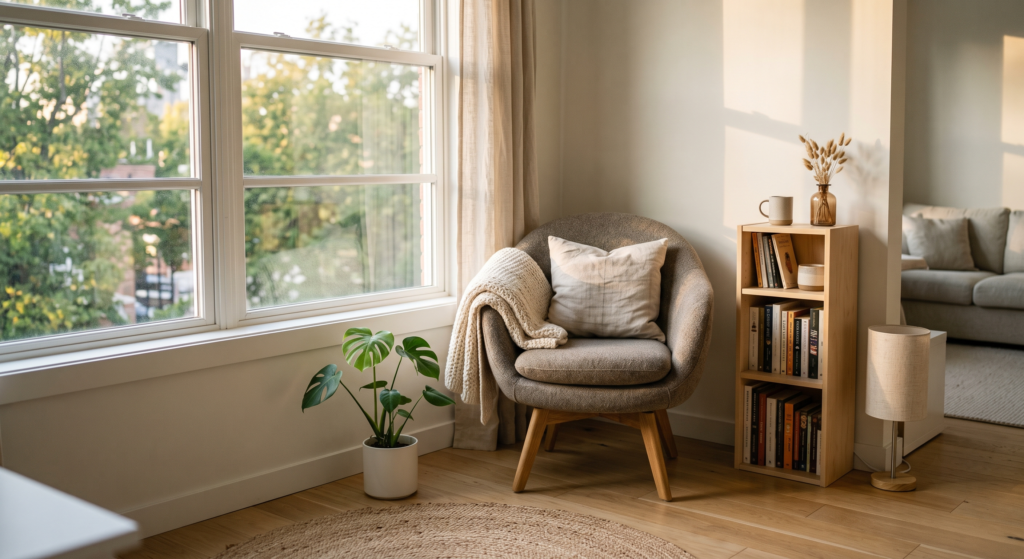
If your space is tight, look for chairs with a smaller footprint but still a supportive back — round swivel chairs and slim armchairs with tapered wooden legs are usually the best fit. Compact doesn’t have to mean uncomfortable; the key is a well-padded seat and a back tall enough to lean into, even if the overall chair is narrow.
Best for Multiple Positions: Oversized Chairs and Chairs-and-a-Half
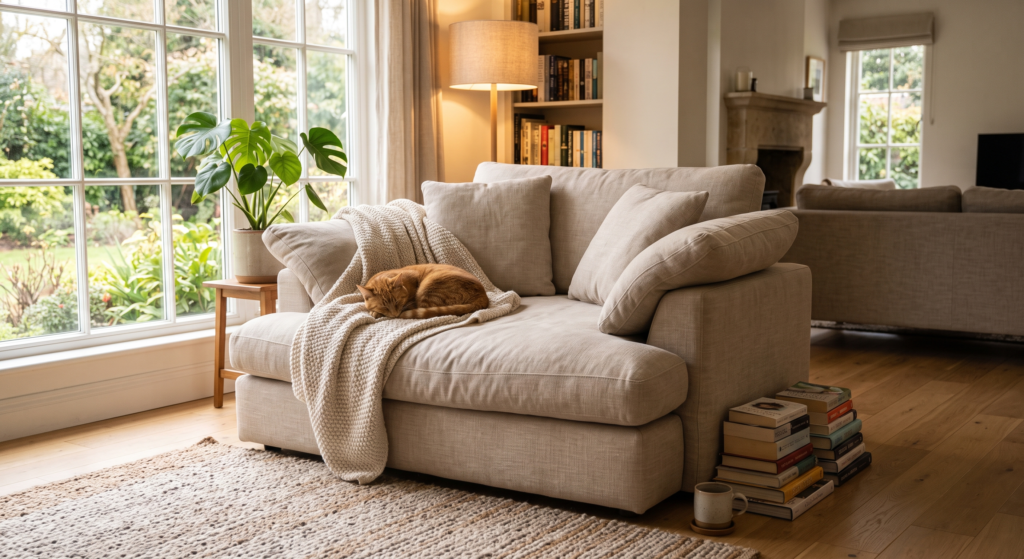
If you like to curl up, stretch out, or share your reading spot with a pet or a kid, a wider “chair-and-a-half” style gives you the room to shift positions without feeling cramped. These work well in bigger rooms or reading nooks with a bit of breathing room around them.
Best for Convenience: Chairs with a Matching Ottoman
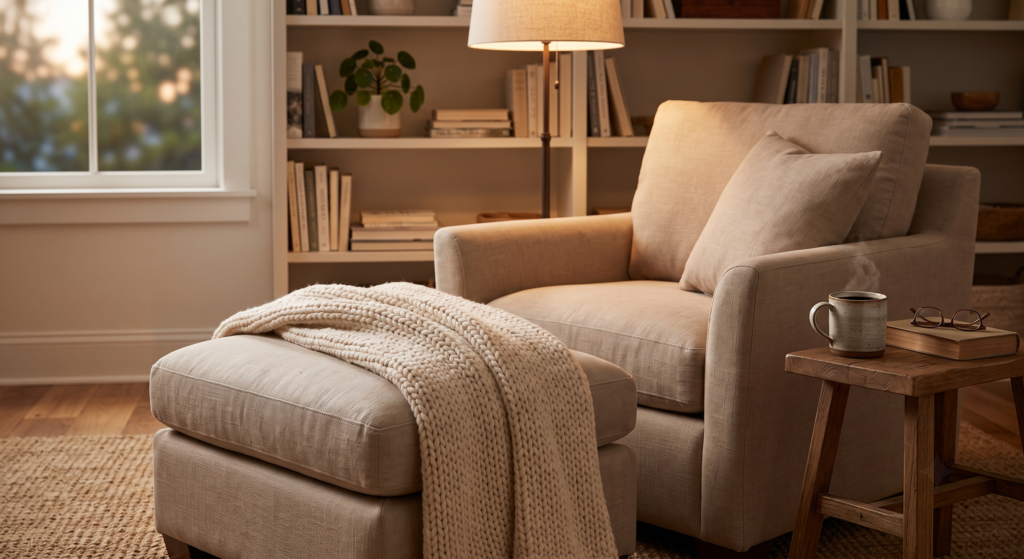
Pairing a chair with an ottoman is one of the simplest upgrades you can make. It lets you elevate your feet, which takes pressure off your lower back during longer sits, and it turns almost any armchair into a genuine lounging spot.
Best for Posture: Ergonomic and High-Back Designs
If you tend to read for long stretches — an hour or more at a time — a chair built with ergonomic support in mind will make a real difference. Look for a firm, contoured back and a seat angle that keeps your spine in a neutral position rather than pushing you into a slouch.
Best for Flexibility: Swivel and Reclining Chairs
A swivel base is genuinely useful if your reading spot doubles as a spot to chat with people, glance at a window, or reach a side table. Reclining chairs are better suited to readers who like to lean back rather than sit upright, though they trade some back support for relaxation.
Best for Classic Style: Leather and Wingback Chairs
Leather chairs age well, get more comfortable over time, and tend to be easy to clean. Wingback styles, specifically, wrap around your shoulders and head, which naturally supports your neck without you having to think about it — a big reason they’ve stayed popular for reading corners for generations.

Best for a Design Statement: Mid-Century Modern Chairs
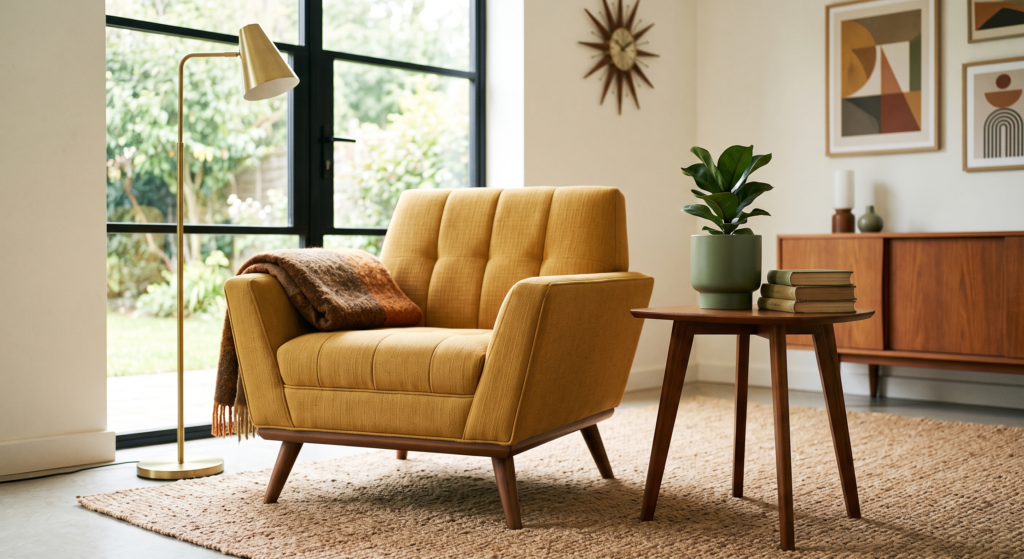
These tend to have lower backs and cleaner lines, which look fantastic but can mean less head support. If you love the look, pair it with a supportive cushion or a small pillow to fill the gap between your shoulders and the top of the chair.
Where Budget Fits In
You don’t need to spend a fortune to get real comfort. Big-box and value retailers carry chairs that check the important boxes — supportive cushioning, a reasonable seat depth, sturdy frames — without the price tag of designer pieces. The trade-off is usually in materials and long-term durability rather than day-one comfort. If you’re testing the waters with your first real reading chair, it’s worth starting mid-range and upgrading later once you know what you actually use the chair for.
Quick Answers
What makes a chair good for reading? A supportive back, a seat height around 17 inches, armrests to hold your book or device, and cushioning that’s firm enough to keep good posture but soft enough for long sits.
Should a reading chair have arms? Yes. Arms give you somewhere to rest while holding a book or tablet, and they reduce strain on your shoulders during longer reading sessions.
Are wingback chairs good for reading? Yes. Their high back and side “wings” support your head and neck, which is especially helpful if you read for long stretches at a time.
What’s the best chair size for a small room? Round or slim-profile chairs with tapered legs are the best fit for small spaces since they take up less visual and physical space without sacrificing back support.
Do I need an ottoman? Not necessarily, but if you like to prop your feet up while reading, a matching ottoman takes pressure off your lower back and makes longer sessions more comfortable.
The Bottom Line
The “most comfortable” reading chair isn’t a single chair — it’s whichever one matches how you actually read. If you like to curl up, look for depth and cushioning. If you sit upright with your feet on the floor, look for back support and the right seat height. If you’re short on space, prioritize a compact frame that still gives your shoulders somewhere to rest. Once you know what you’re looking for, the shopping part gets a lot easier.