
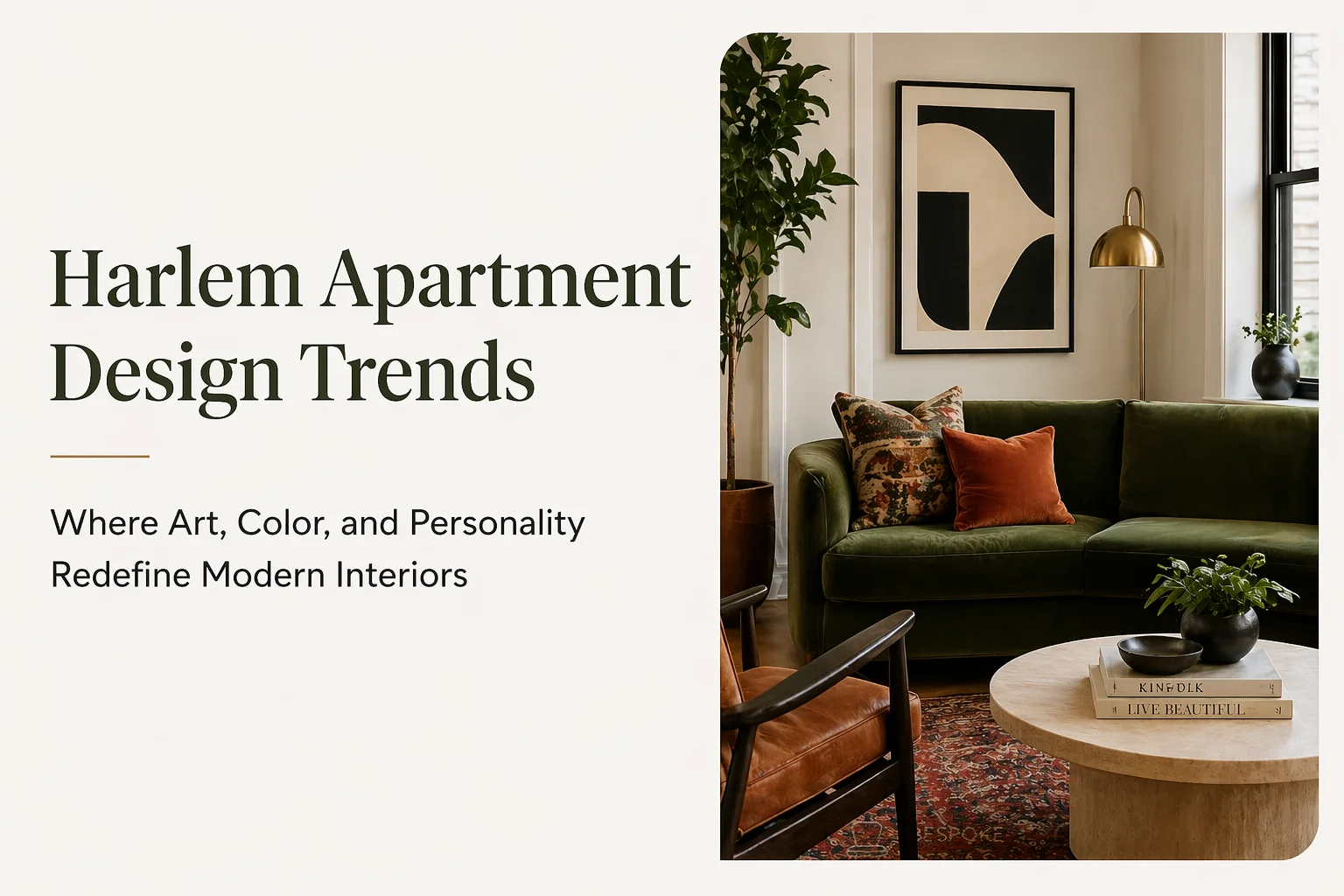
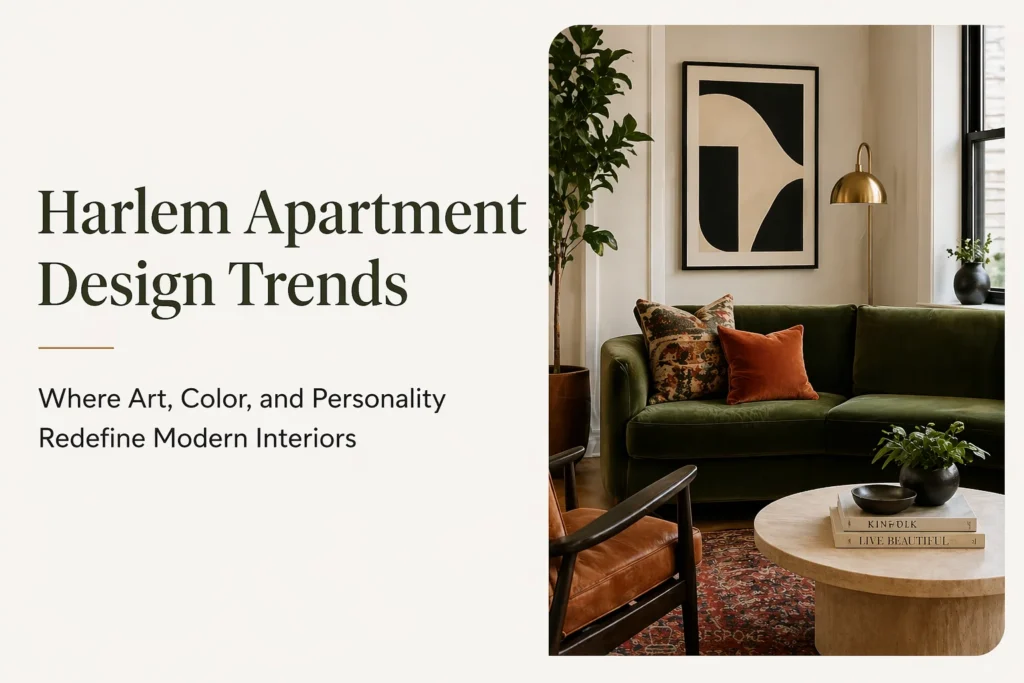
🏙️ Harlem Apartment Design Trends: Where Art, Color, and Personality Redefine Modern Interiors
Harlem has quietly become one of the most influential design hubs in New York City, where apartments are no longer just living spaces—they are turning into immersive, art-driven environments.
🎨 The Harlem Design Shift: From Neutral to Narrative Spaces
Traditionally, New York apartments leaned toward neutral palettes and safe layouts. But in Harlem, a new design language is emerging—one that treats every room like a personal gallery.
Designers like Jarvis Wong of Jarvis Studio are leading this movement by blending art, architecture, and emotion into a single visual story.
Instead of hiding personality, these homes amplify it.
Key Shift in Modern Harlem Interiors:
- From beige minimalism → to color-drenched storytelling
- From generic furniture → to bespoke, sculptural pieces
- From empty walls → to curated art collections
🖼️ Art-Led Interiors: When Homes Become Galleries
One of the strongest trends in Harlem apartments is the rise of art-led interior design.
Homes are now built around statement artworks rather than furniture placement.
Think:
- Large-scale photography pieces
- Abstract paintings as focal walls
- Sculptural lighting installations
Designers often treat art as the “starting point” of a room, not the finishing touch.
This approach creates a layered emotional experience—something that both Houzz and Homes & Gardens consistently highlight in their featured Harlem homes.
🌈 Color Drenching: The Bold Signature of Harlem Apartments
If there is one defining feature of modern Harlem interiors, it is color drenching.
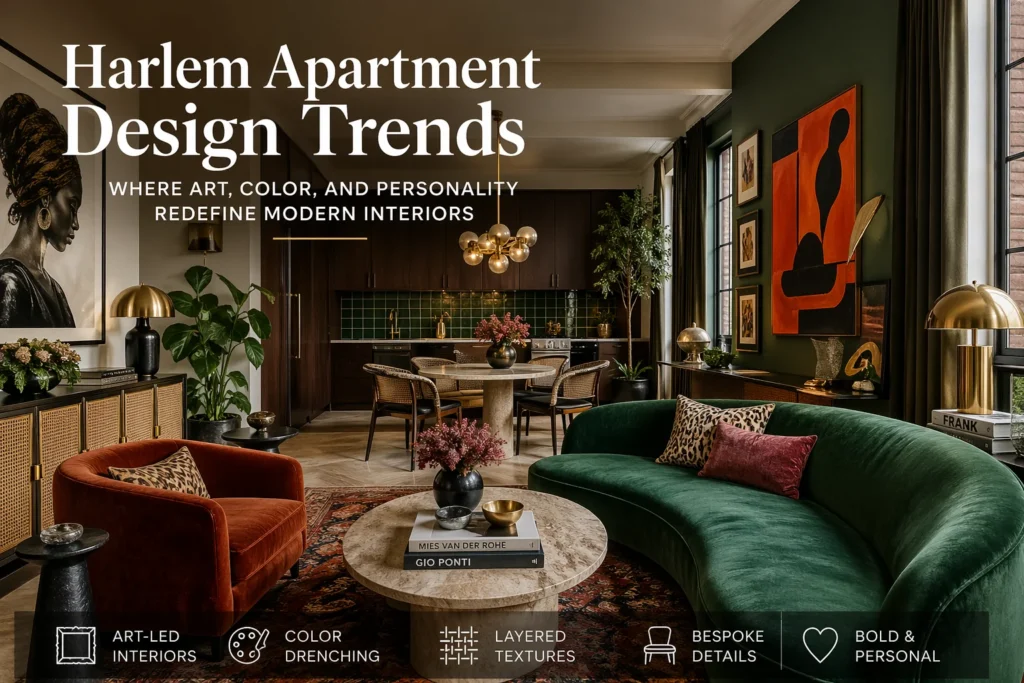
Instead of using color as an accent, entire rooms are saturated in deep, expressive tones:
- Emerald greens
- Burnt oranges
- Royal blues
- Earthy burgundy shades
This technique creates a “jewel-box effect”—a space that feels intimate, immersive, and emotionally rich.
Why it works:
- Enhances spatial mood
- Creates visual continuity
- Makes small apartments feel intentional, not limited
🪑 Materials That Define the Aesthetic
Modern Harlem interiors rely heavily on tactile contrast. Materials are chosen not just for looks, but for emotional texture.
Common combinations include:
- Mahogany wood for warmth and depth
- Travertine surfaces for elegance and grounding
- Velvet upholstery for softness and luxury
- Brass accents for reflective contrast
- Rattan and natural fibers for balance
These layers create what designers call “controlled maximalism”—rich but not chaotic.
🏡 Case Study Style Breakdown: Two Harlem Interior Approaches
1. The Art-First Luxury Apartment (Studio-Led Design)
Inspired by design studios like Erik Staley’s creative direction work, this style focuses on:
- Museum-like room composition
- High-end materials (marble, travertine, brass)
- Curated international art pieces
- Architectural lighting design
👉 Result: A cinematic, gallery-like living space
2. The Experimental Color Apartment (Houzz Feature Style)
As seen in stories on Houzz, this approach is more playful and personal:
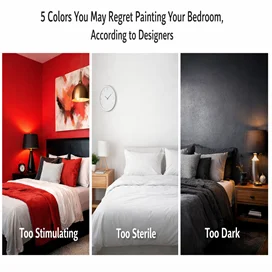
- Bold paint experiments
- DIY furniture customization
- Eclectic thrifted décor
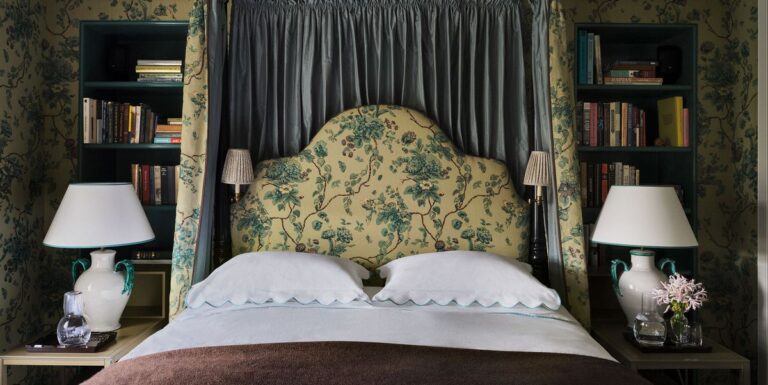
- Pattern layering (rugs, wallpapers, textiles)
👉 Result: A fearless, expressive home full of personality
📊 Design Style Comparison
| Style Type | Core Idea | Materials | Emotional Feel |
|---|---|---|---|
| Art-Led Luxury | Gallery-inspired living | marble, brass, custom furniture | refined, cinematic |
| Experimental Color Living | Personal expression | wallpaper, mixed textiles | playful, bold |
| Harlem Maximalism | Controlled richness | velvet, wood, layered art | immersive, warm |
🧠 The Psychology Behind Harlem Interior Design
What makes these apartments stand out is not just design—it’s psychology.
Modern Harlem interiors focus on:
- Emotional comfort through color
- Identity expression through objects
- Storytelling through layout
Instead of asking “What looks good?”, designers now ask:
👉 “What does this space feel like to live in?”
This shift is why these apartments feel more human and less staged.
🧩 What Competitors Missed (Your SEO Advantage)
Most existing articles—including features from Homes & Gardens and Houzz—focus heavily on visuals but miss key SEO and content depth opportunities:
Missing angles:
- No structured comparison of design styles
- Little focus on psychological impact of color
- No budget-friendly replication guide
- Limited cultural sourcing discussion
- Weak “how-to recreate this style” sections
👉 This is your opportunity to outrank them.
🛠️ How to Recreate Harlem Apartment Style (Practical Guide)
If you want this aesthetic in your own home:
Start with one bold base color
- Choose deep green, navy, or terracotta
Layer textures aggressively
- Mix velvet, wood, metal, and woven materials
Add 1–2 statement art pieces
- Large-scale, not gallery clutter
Balance chaos with structure
- Use symmetry in furniture placement
🚀 Final Takeaway
Harlem apartment design is no longer about decoration—it’s about identity, emotion, and artistic storytelling.
Where older interiors prioritized neutrality, modern Harlem spaces embrace:
- Bold color psychology
- Art-driven layouts
- Personal expression over perfection
This is what makes the style so powerful—and why it’s becoming one of the most searched interior design trends today.